Wait. Who is hipages?
hipages is the online platform that connects Australian homeowners with trusted tradies to simplify home improvement.
Background
The Early Tenure Team at hipages discovered a major user & business problem during research calls with tradies, where a common problem was identified;
Tradies were not communicating quickly enough with potential customers, thereby missing out on winning work that could have, in turn, increased their risk of churning.
When comparing this problem with others that might lead to tradie dissatisfaction, the team decided to focus on the response speed of tradies as they hypothesized that mitigating this problem would lead to more active tradies & help them win more work. Plus, fixing the issue did not require any complex changes to the overall product.
Period
2 quarters
2022-2023
My Role
As a sole Lead Product Designer in my team, I was responsible for the end to end process and contributing to the product roadmap & strategy.
Team
Tools

First, let’s zoom out.
How was the high-level problem discovered?
Lagging metric:
Customer churn
Leading metric:
% of tradies who are active (split by tenure and renewal segments)
Research
Both quantitative and qualitative research methods were conducted.
The goal was to understand the full Tradie user journey end-to-end with the highs and lows, especially focusing onto the first 30 days onboarding stages.
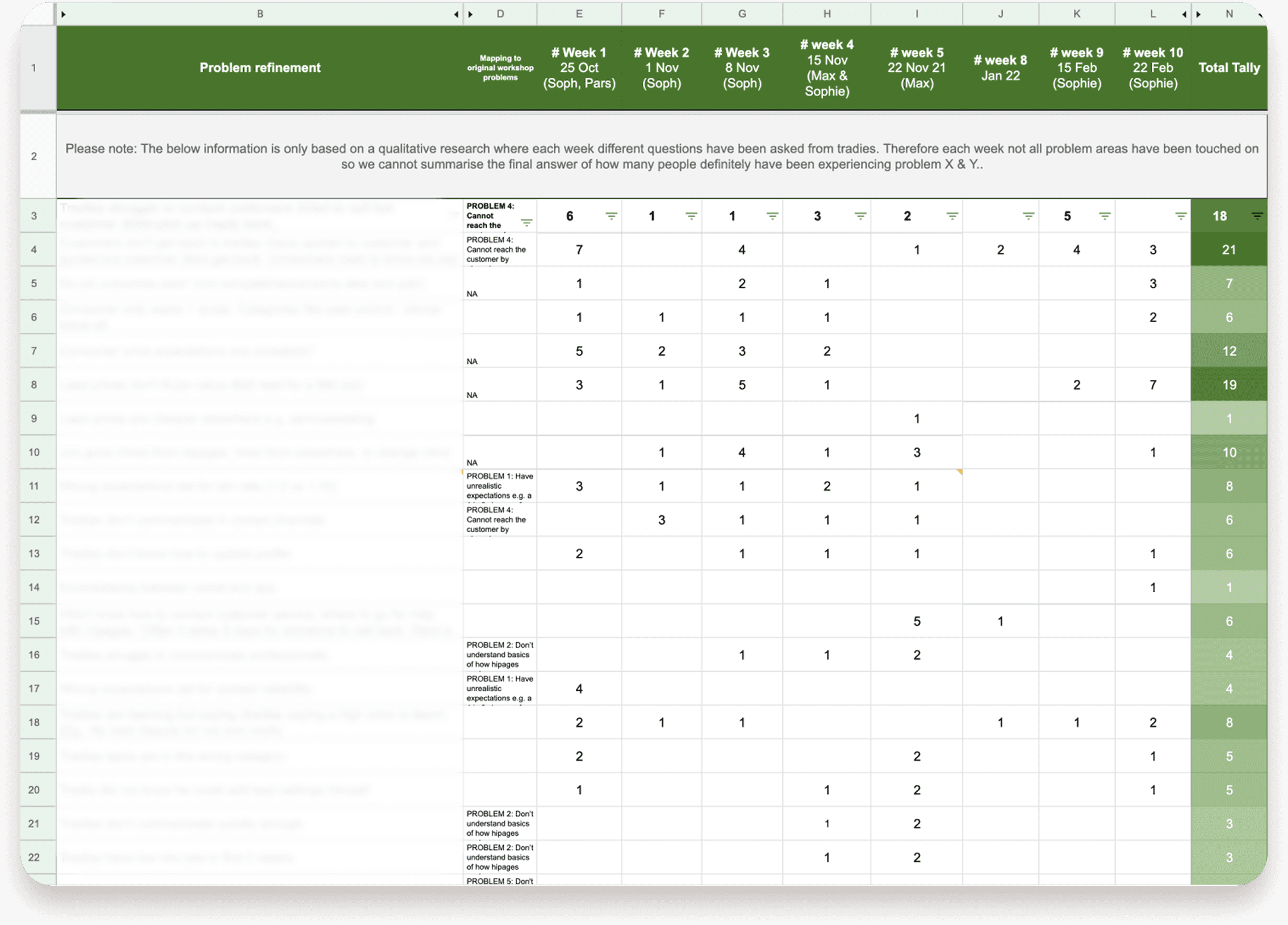
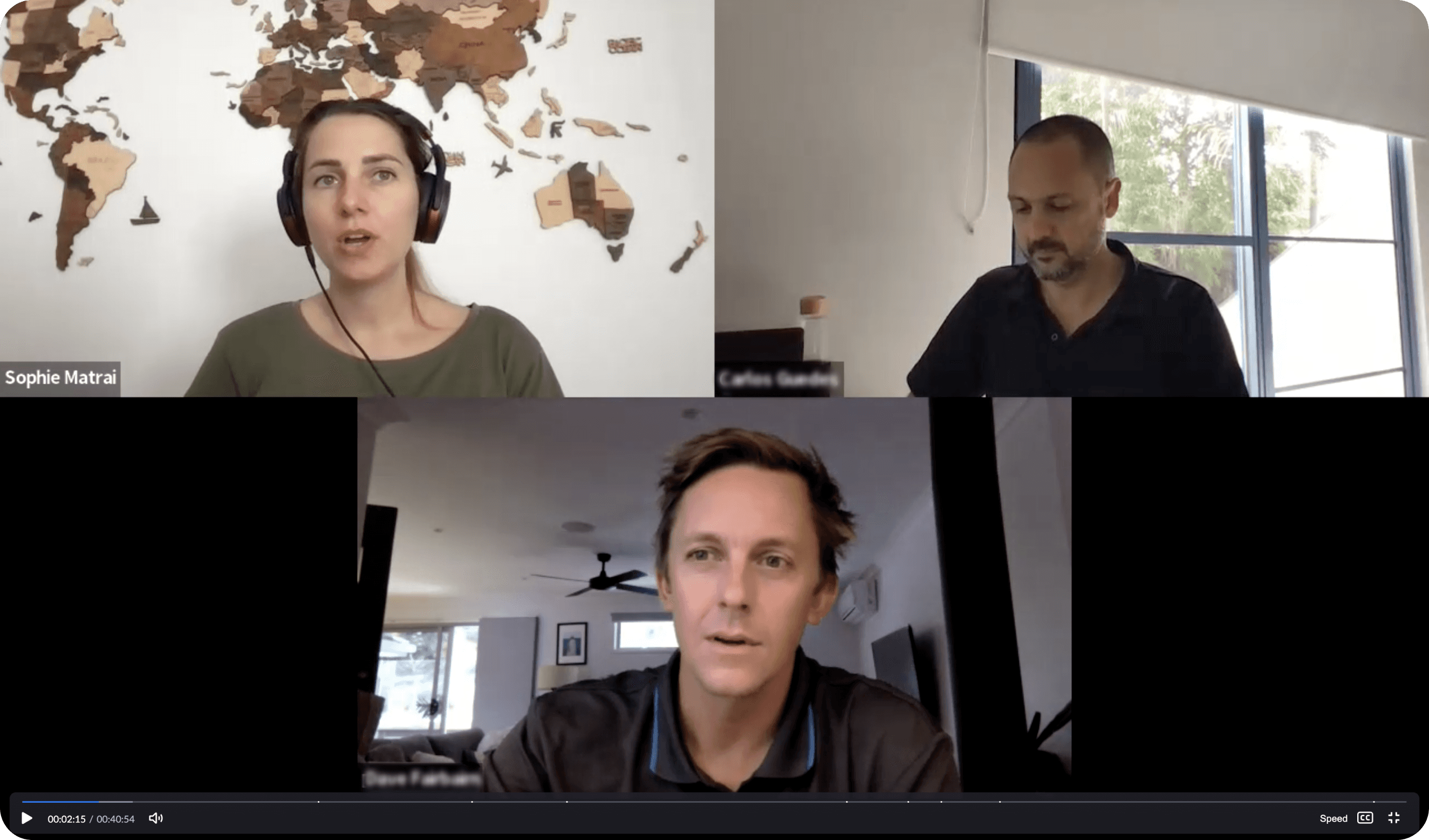
Over multiple weeks, we talked to 91 tradies and 13 homeowners and wanted to find out:
Why was there a reduced churn rate during early days so early on, especially on lower tiers?
What led to the reduction in the frequency of tradies paying for work leads?
How were these problems experienced on the platform?
13
Homeowners
91
Tradies
User-journey
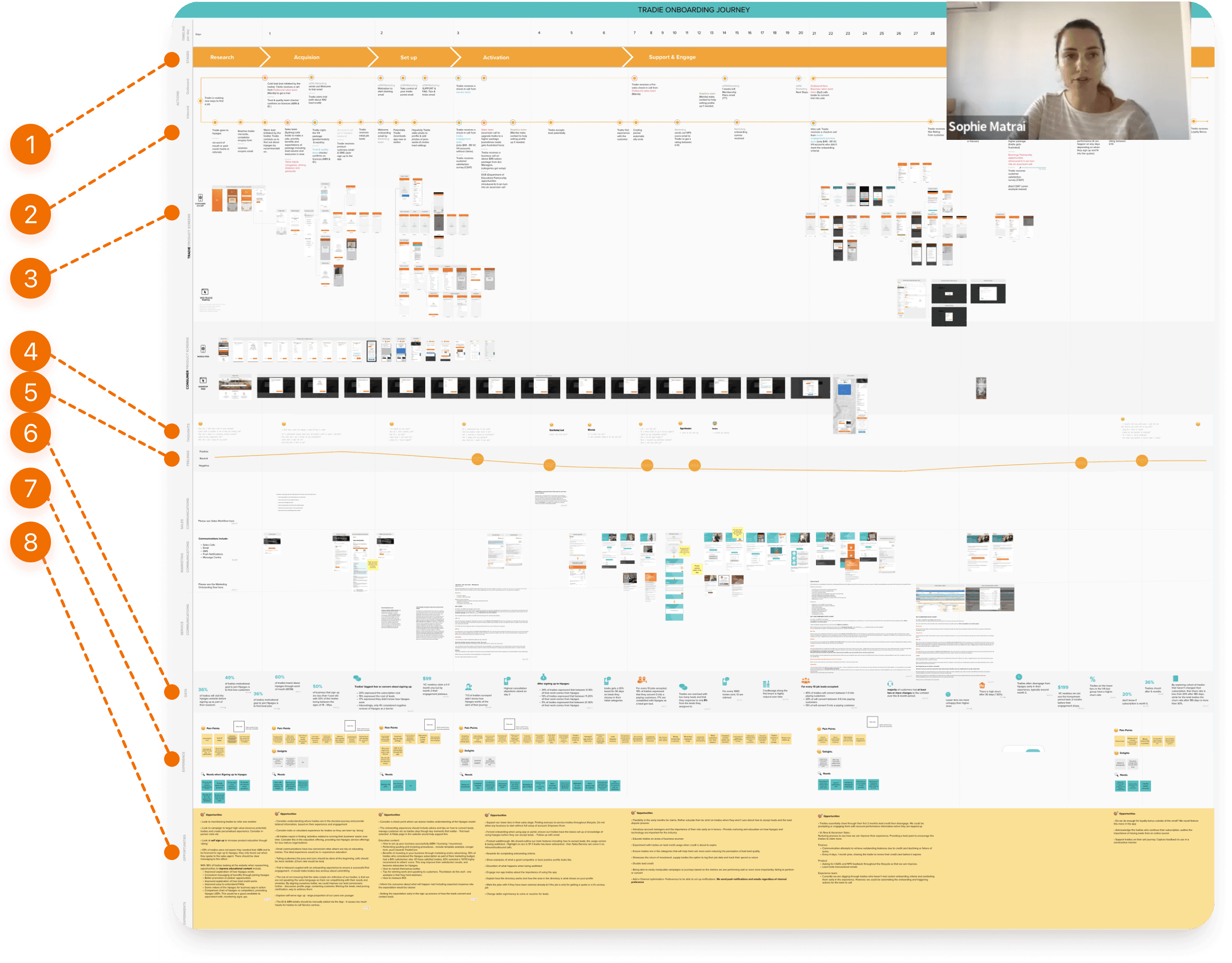
Over the course of the 4 weeks worth of interviews, I created a user journey map to better understand the Tradie lifecycle, focusing on the first 30 days and outlining:
What are the key lifecycle phases (from acquisition, through to activation and engagement)
Where, when and how do Sales, Marketing, Service and Product communicate with the tradie
Product screen flow (Tradie & Homeowner journeys via app & website)
Tradie & Homeowner thoughts during lifecycle
Tradie & Homeowner's change of emotions
Quantitative data highlighting key facts in each stage
Biggest pain points & delights & needs synthesised from interview analysis
Potential opportunities for product improvements
After speaking with the internal customer-facing teams as well as tradies, it became clear that one of the most significant problems we kept encountering was the low win rate of tradies, which eventually led to churn. After digging deeper and talking to homeowners about the potential causes, a major contributor was that after a Tradie accepted a job lead from the homeowner in the app, Tradies were not reaching out to them quickly enough or at all, therefore, missing out on jobs due to the highly competitive nature of the platform, which left homeowners frustrated.
Pre-EOFY Product Strategy session
Leading up to the EOFY Strategy meeting, I was asked to gather my research insights on customer needs and goals and identify the most significant opportunity areas.
To ensure the above problem was a valuable issue worth focusing on, I reviewed additional data to provide more context and detail.
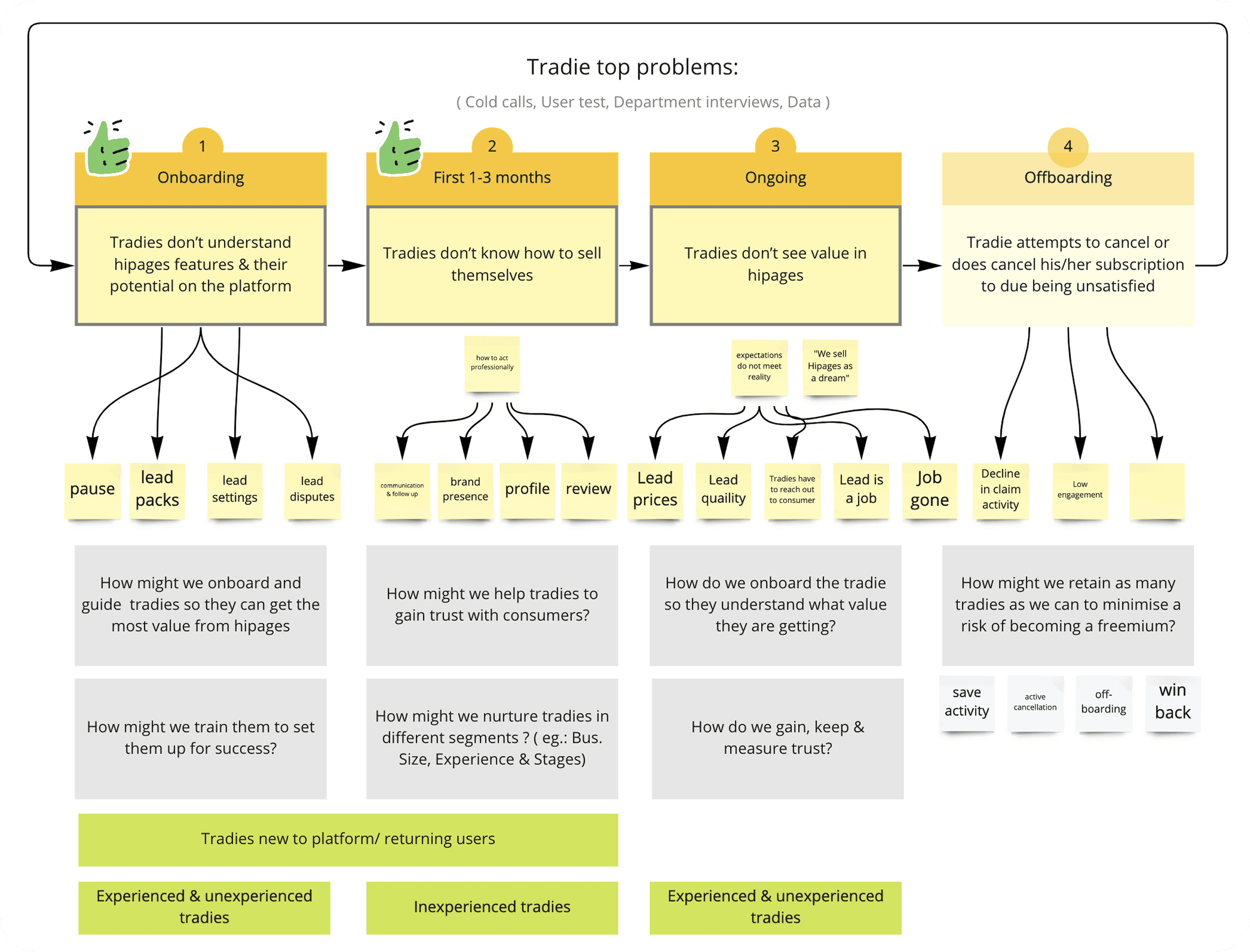
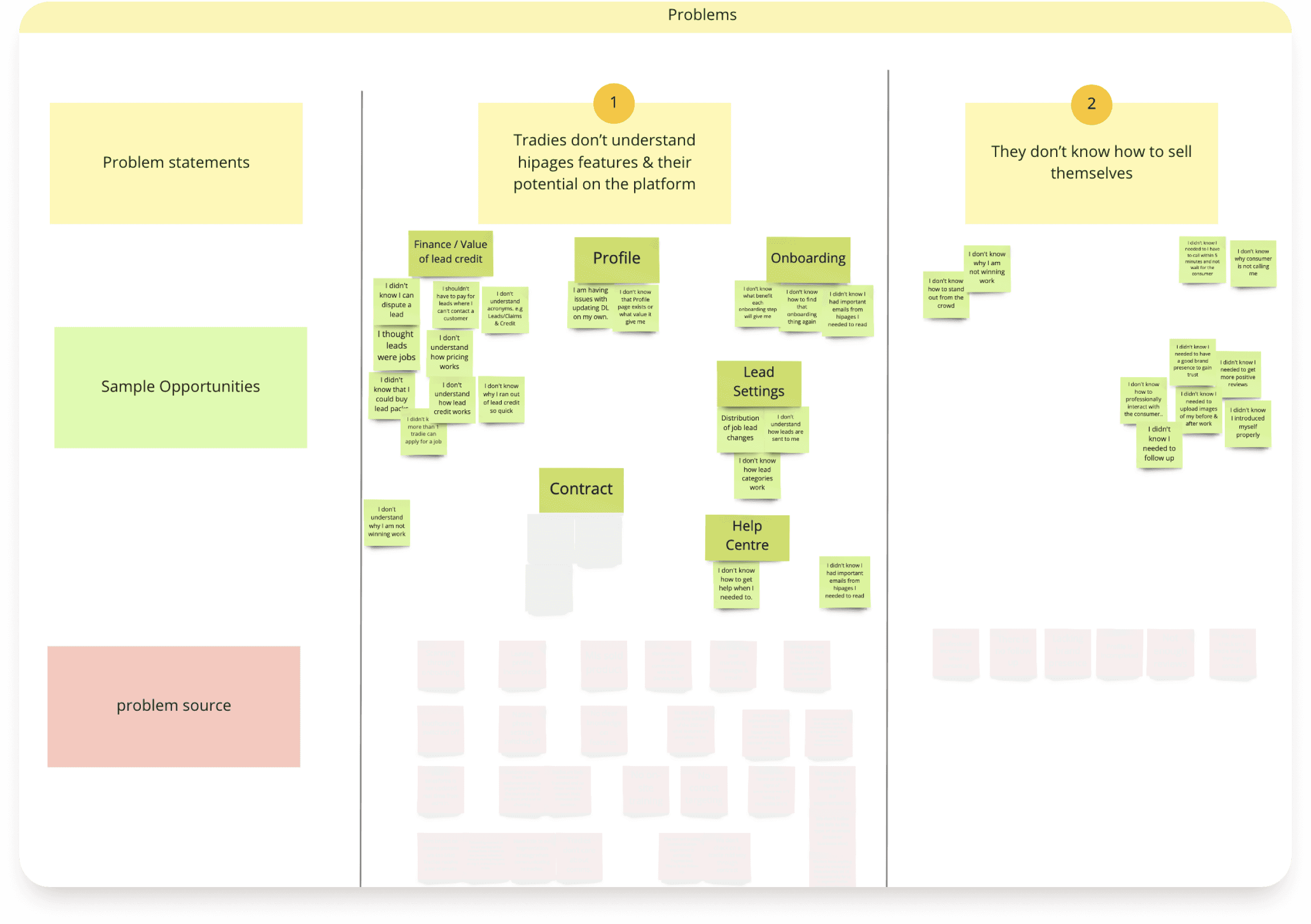
I then prioritised these problems and built a linear progress graph to explain to stakeholders in a pre-EOFY product strategy session how these problems contribute and relate to each other, as well as other opportunities within the problem space.
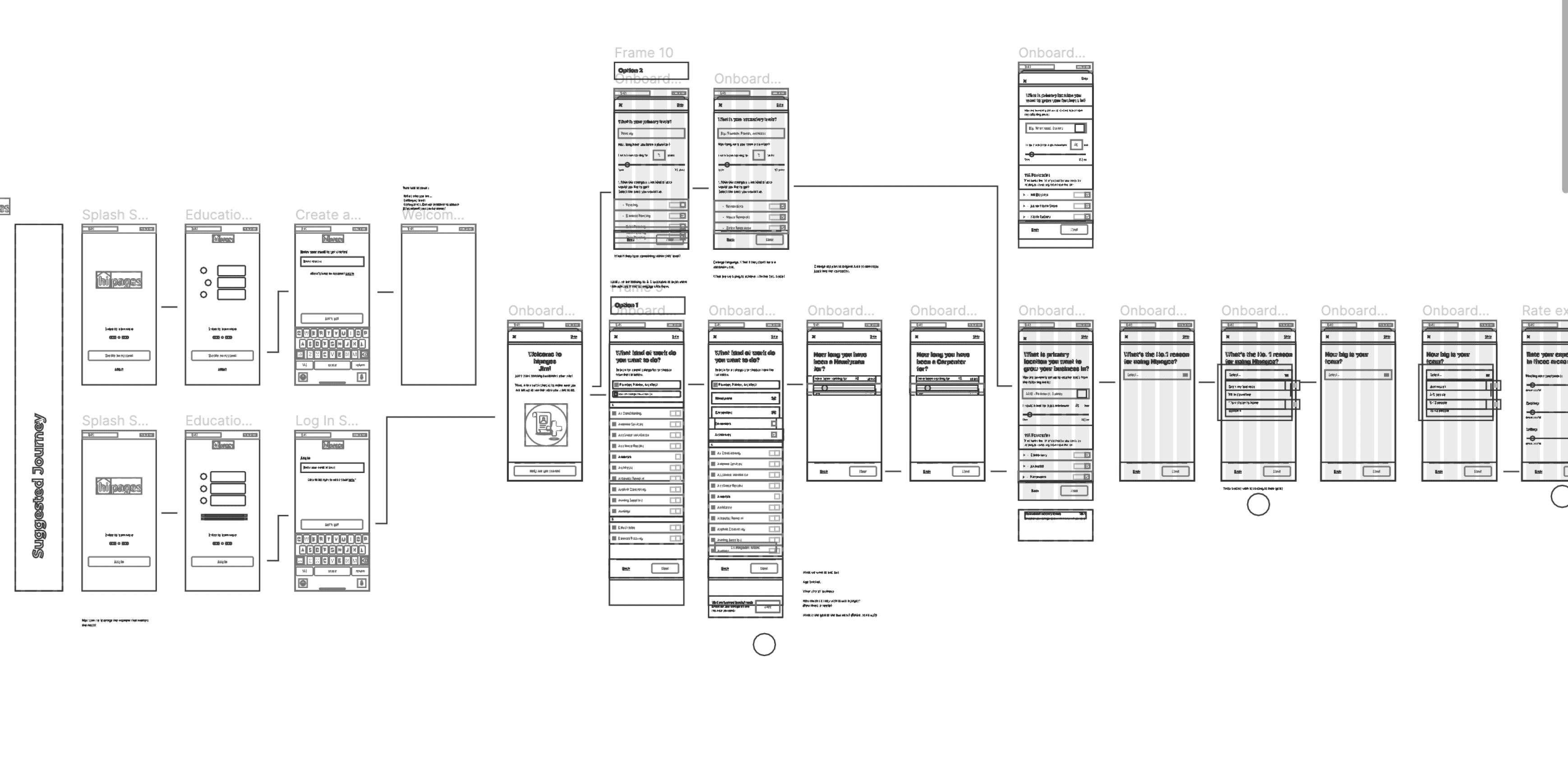
1.
Tradies did not understand the features and their potential on the platform. (During Onboarding phase)
2.
Tradies did not know how to sell themselves (During first 1-3 months)
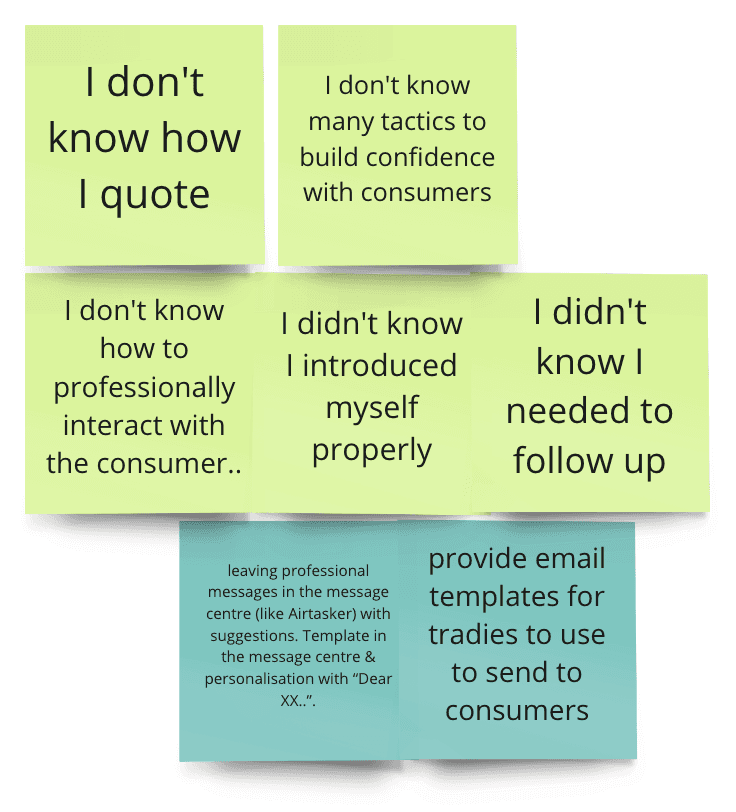
It was clear during the phone research that many tradies did not introduce their business and themselves properly.
We knew we had found a space with an opportunity to improve in the “Communication & follow-up” problem space.
We decided to focus on the second problem “Tradies did not know how to sell themselves” which was often the case in the first couple of months of their hipages tenure.
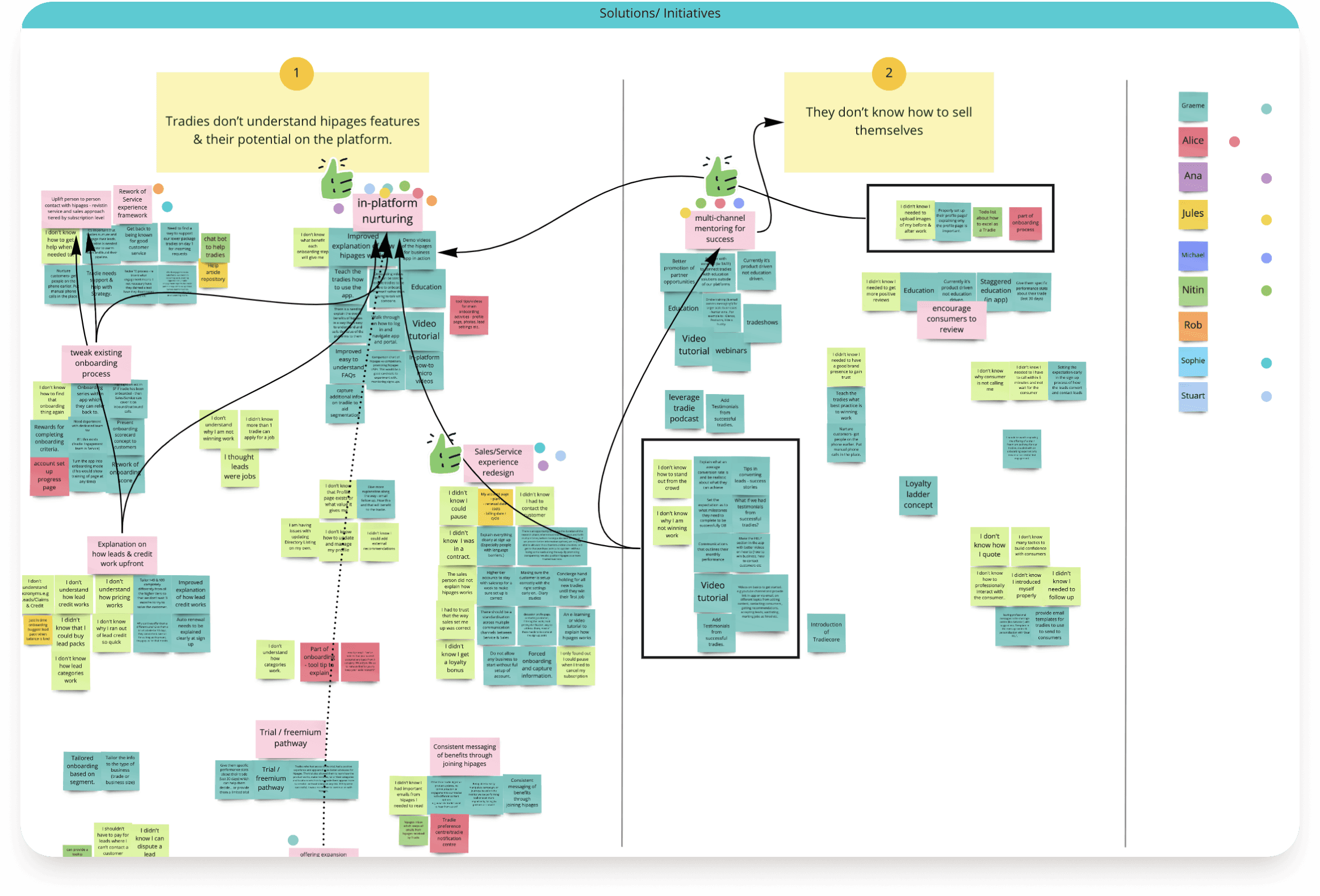
In the visualisation below I outlined the range of opportunities we were choosing between and also show some underlying causes for the chosen problem: “Tradies did not know how to sell themselves”
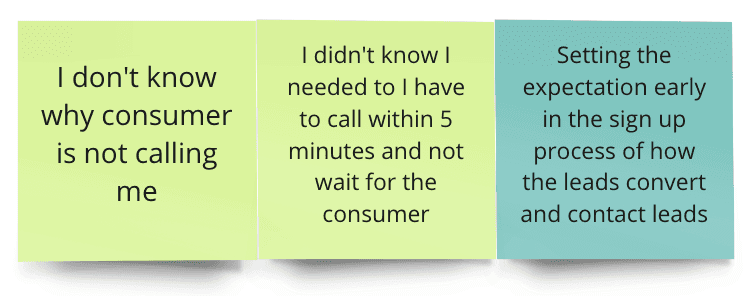
What we heard from tradies:
Ideation session
Next, I organised an ideation workshop with the broader team & stakeholders to brainstorm potential solution ideas and see how each solution could also contribute to improving other problem spaces.
Some solution ideas were generated:
Teach the tradies what the best practices are to win work, such as nurturing customers and getting people on the phone earlier.
Explain early in the signup process how leads are converted and the value of contacting customers.
Help tradies leave professional messages in the hipages message centre with suggestions and templates that offer options for personalisation.
Provide email templates for tradespeople to use when sending to consumers.
It would be worth exploring the offering of a richer trial / freemium pathway for our tradies, coupled with an onboarding experience to ensure a successful first engagement.
Team strategy pivot
At this time of our journey, the team driven by me decided to pivot because the upper management realised that we did not focus on the most critical issues indeed (partially because of external pressure), so now that I broke down the most significant problem areas with facts while outlining the key opportunities, we made a pivot.
That meant that our objectives became:
Objective 1: Increase Tradie Engagement
Objective 2: Increase Tradie Trust of hipages
Objective 3: Help tradies get more value from hipages
The Strategy is now focused on onboarding tradies from day 0, identifying critical actions such as contacting customers, claim experience and profile completeness. We also considered:
How can we use a Hook model to increase? Engagement, incentivise & reward the correct behaviour?
How can we create a multi-channel onboarding approach with consistent messaging across all touch-points?
How can we adopt an iterative approach versus a “big upfront design”?
Understanding the ‘Tradie Response speed of contact problem space
Research Analysis
25%
57%
didn’t know they need to call the consumer.
18%
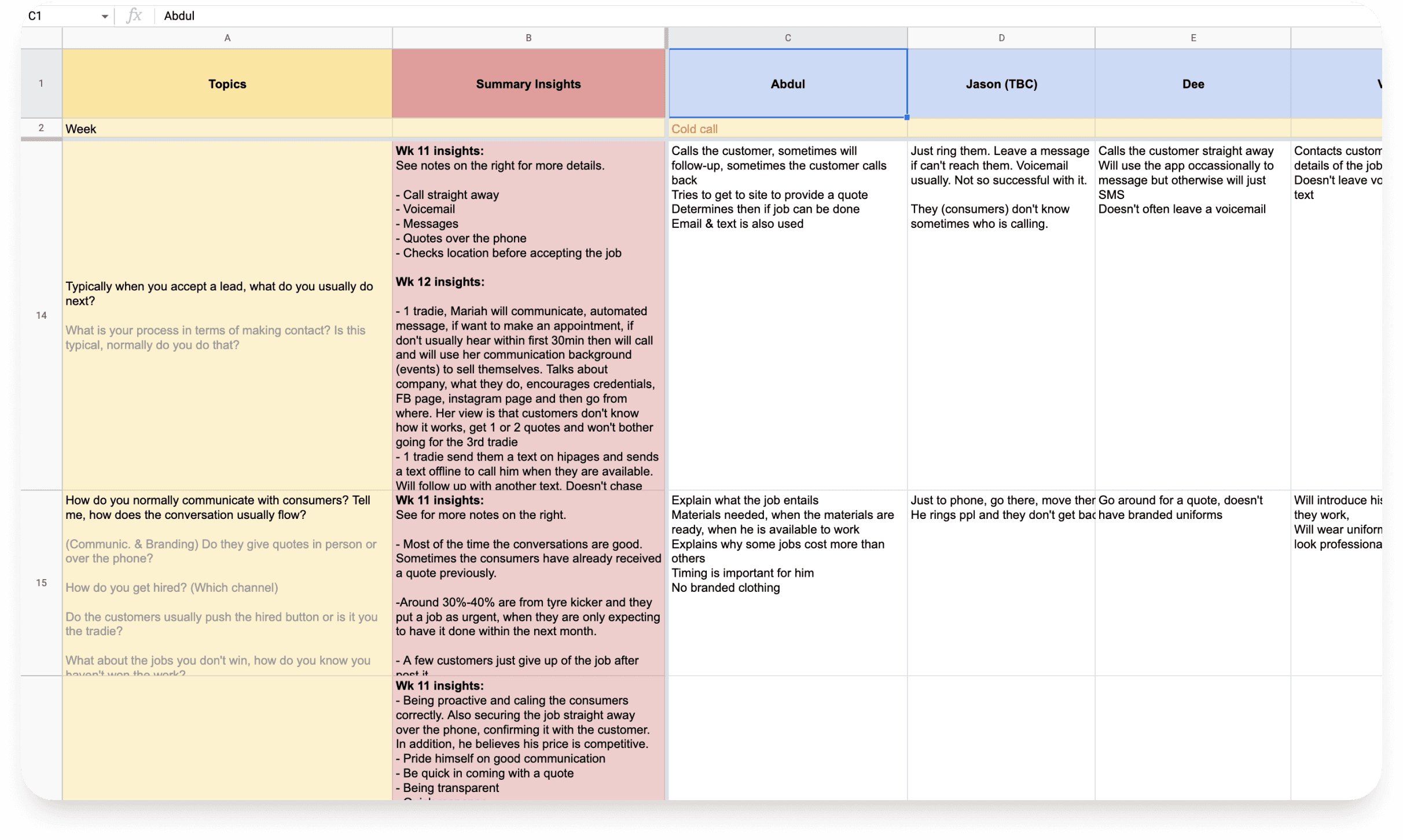

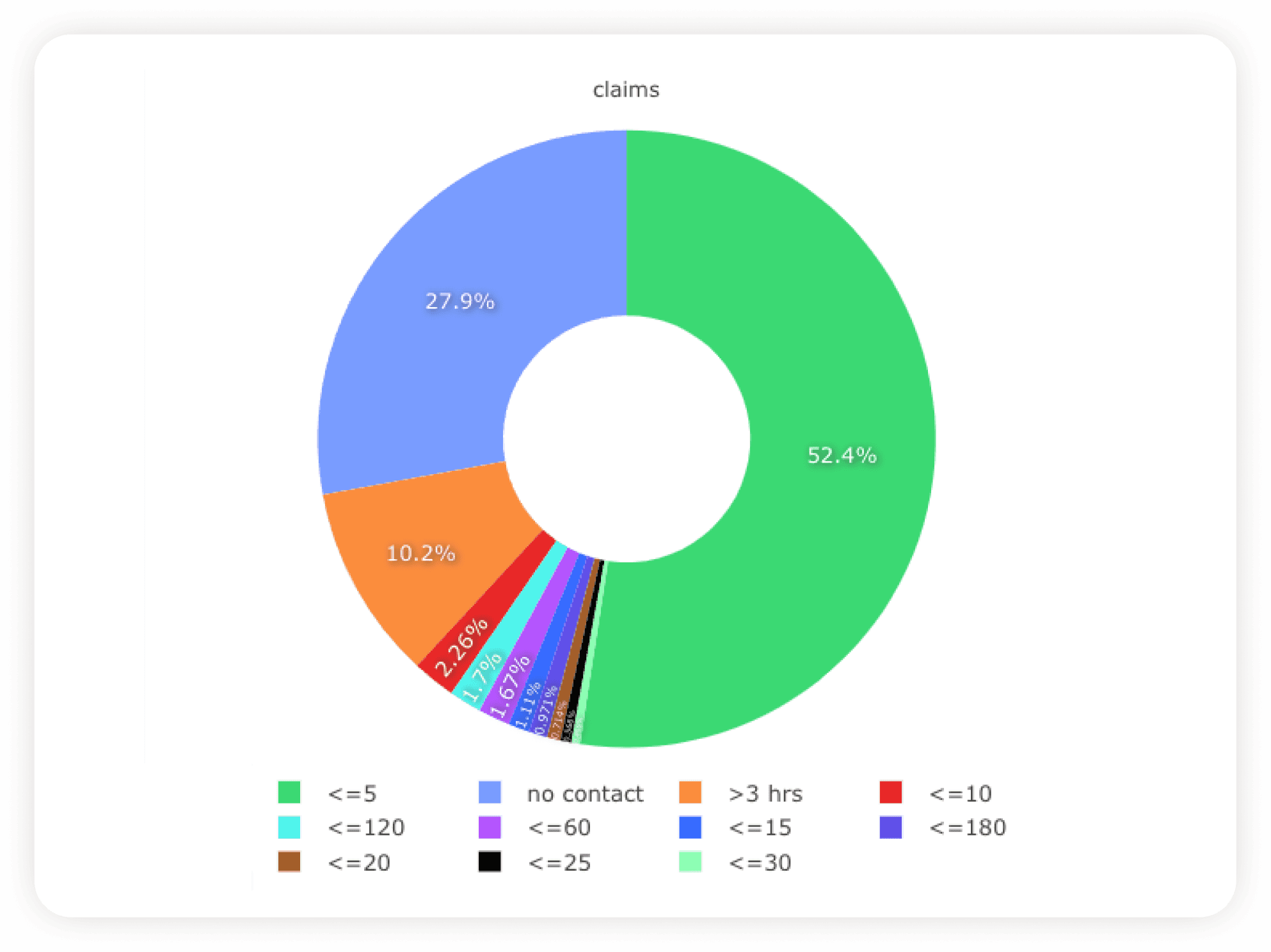
At the same time we also looked into data to better understand the quantitative facts.
When looking only on Early Tenure (last 6 months) the picture is quite similar:
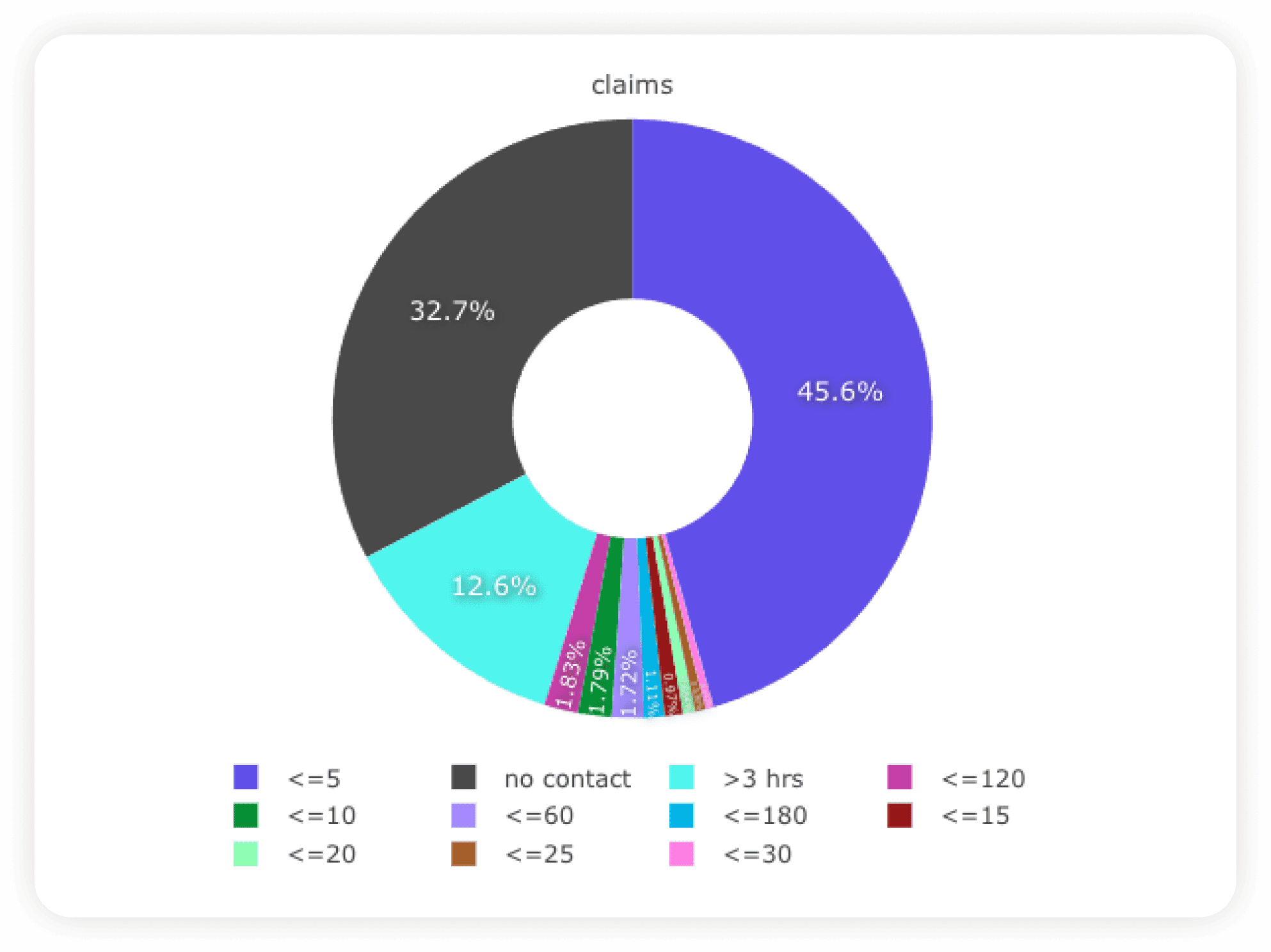
Source: Looker Data Report.
ET Time to Response
Team focus
Our goals were to ultimately change the long-term behaviour of tradies but we also needed to observe them using the product with the new experimental designs and measuring the impact & outcome of the delivered solution.
Given the fact, tradies were doing well, where 52.4% of tradies had good contact behaviour, that did not satisfy us. Still, 27.9% of tradies had not reached out to the homeowners at all, so we wanted to improve their response speed rate:
Continue to discover and explore different methods to gather quantitative and qualitative insights into the tradies’ & homeowners’ biggest problems, barriers and needs.
Run experiments to test the hypotheses and learn how we can achieve change in bad user behaviour and achieve the outcomes we want.
Constraints
The team had limited time to produce experiments, as the company expected them to build and release them at scale within 2-3 months. Additionally, some team members were not yet familiar with the problem space and lacked experience with experiments.
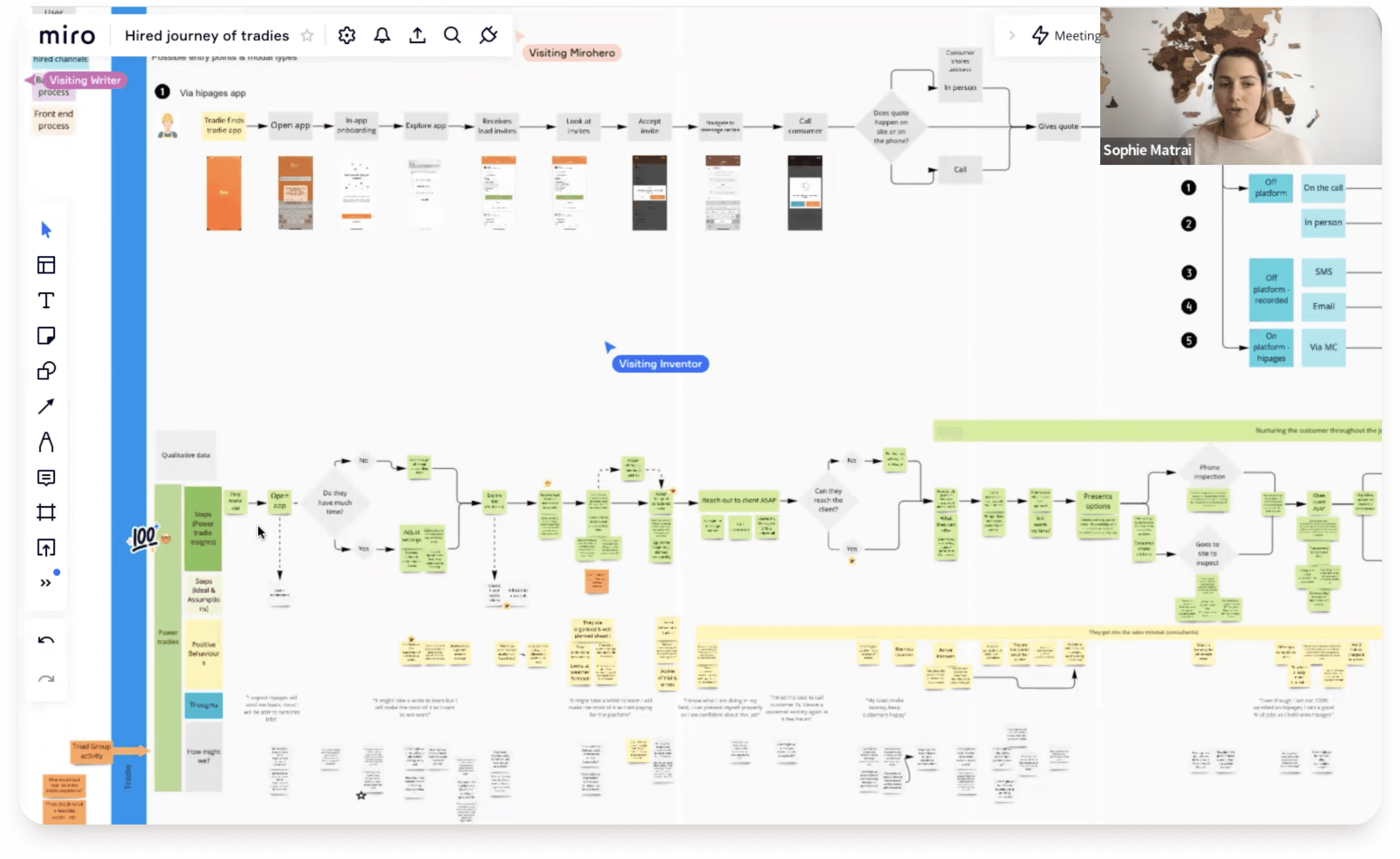
Successful User & Less successful Tradie journeys
Based on the latest insights and previous interviews I have done with more than a 100 users by then, I created a power user ( successful tradies = tradies who succeed in winning jobs ~ 20%) journey outlining the key steps these tradies take in order to win more work. I also created a journey for tradies who tend to churn early on and compared the two flows.
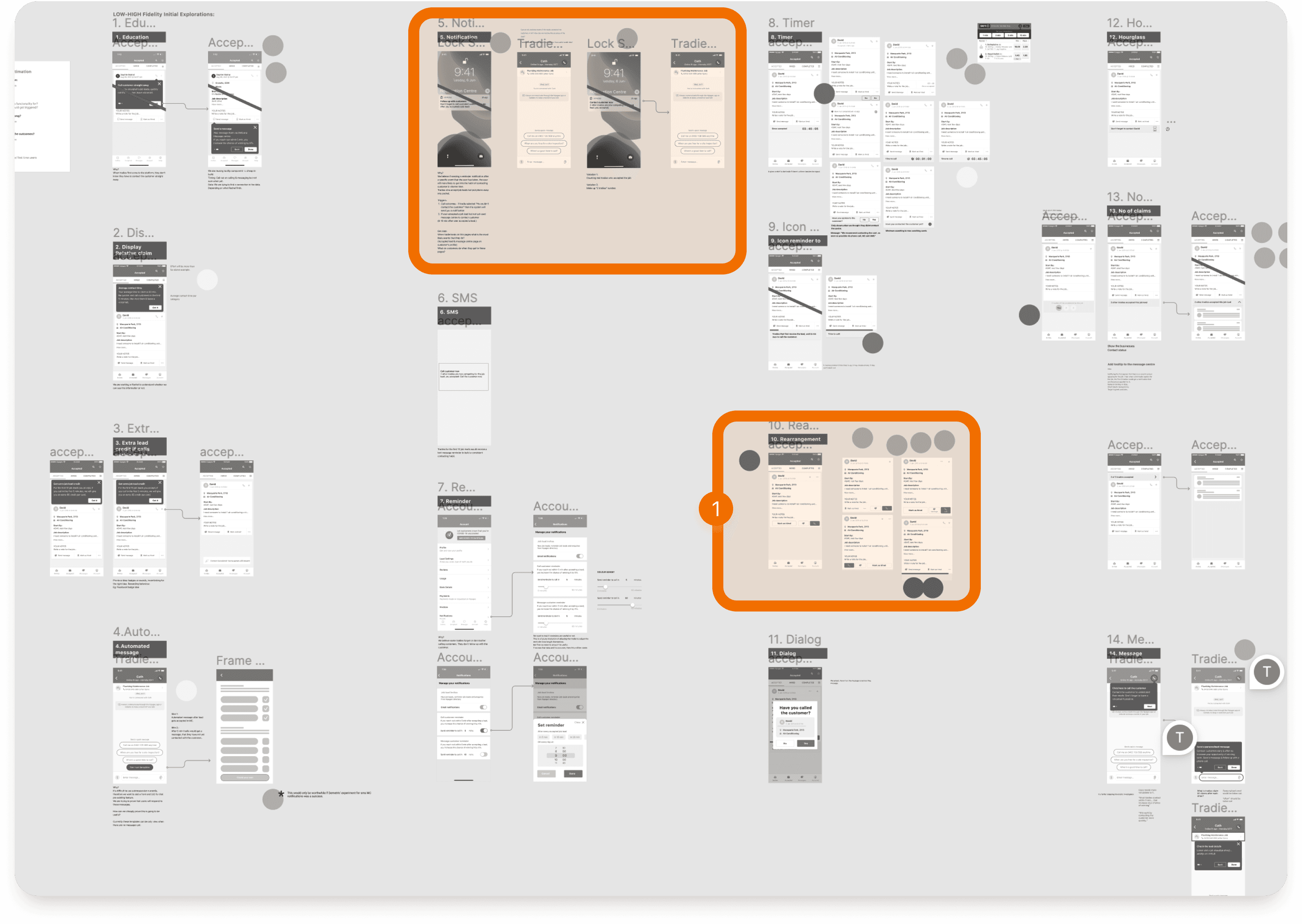
Solutions Prioritisation & Selected Experiments
Knowing that those tradies who claimed a job lead, 27.9% of them had 0 contact with the consumers, we decided to target this Tradie Response Speed problem.
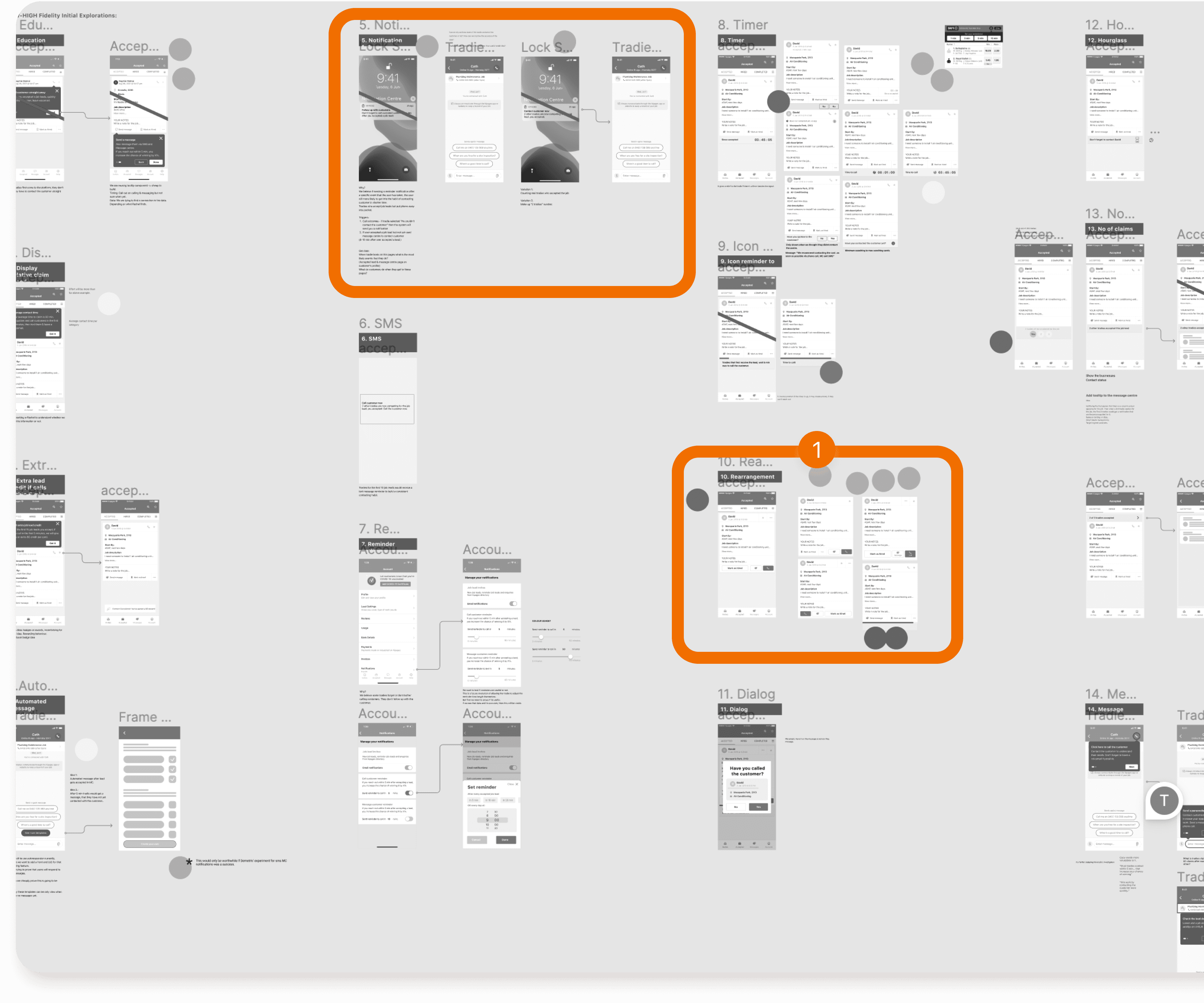
After generating some low and mid-fidelity designs and exploring potential solutions for it, we were able to prioritise our ideas based on their value vs. risk, deciding to run experiments on the following ideas:
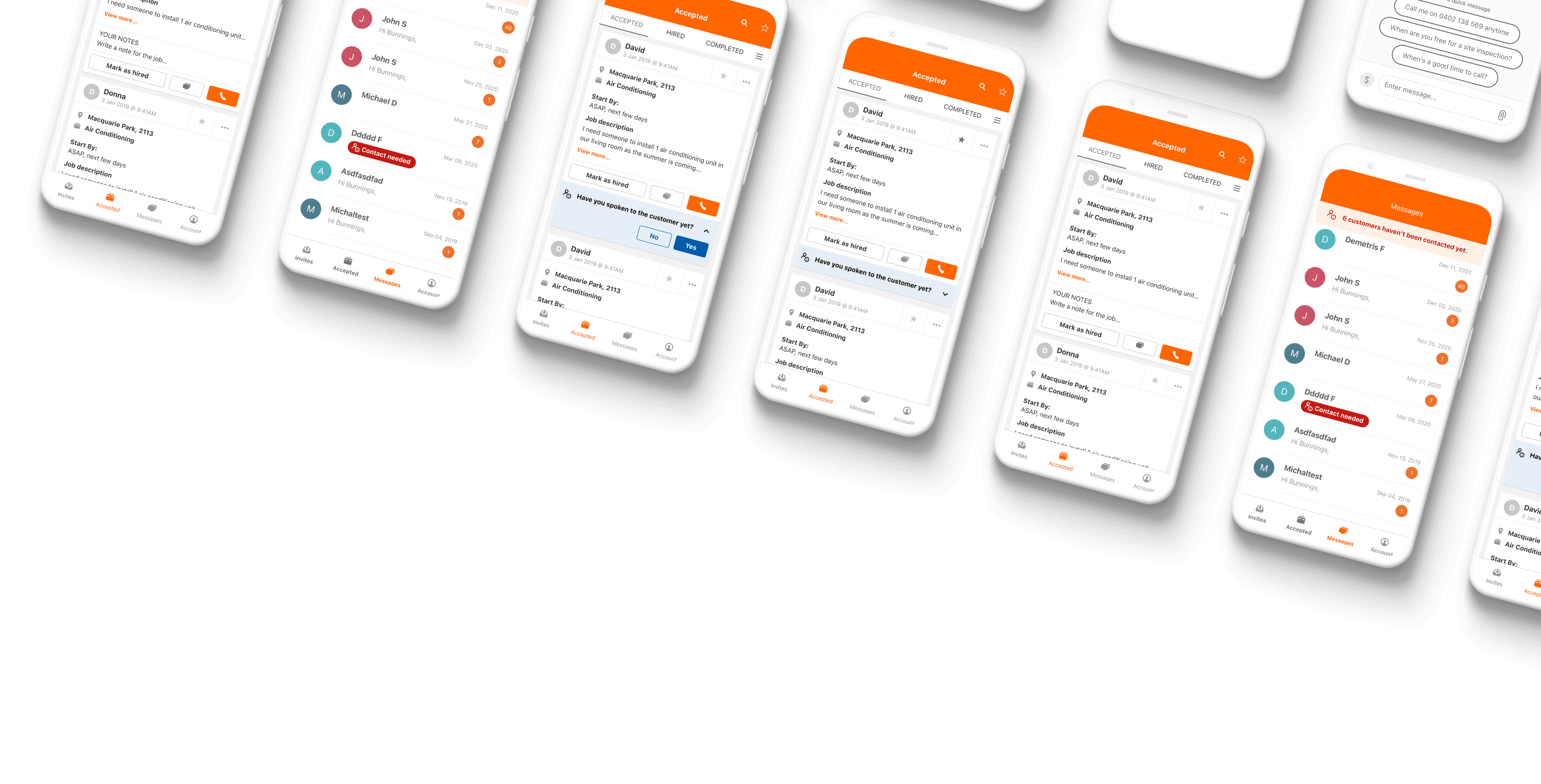
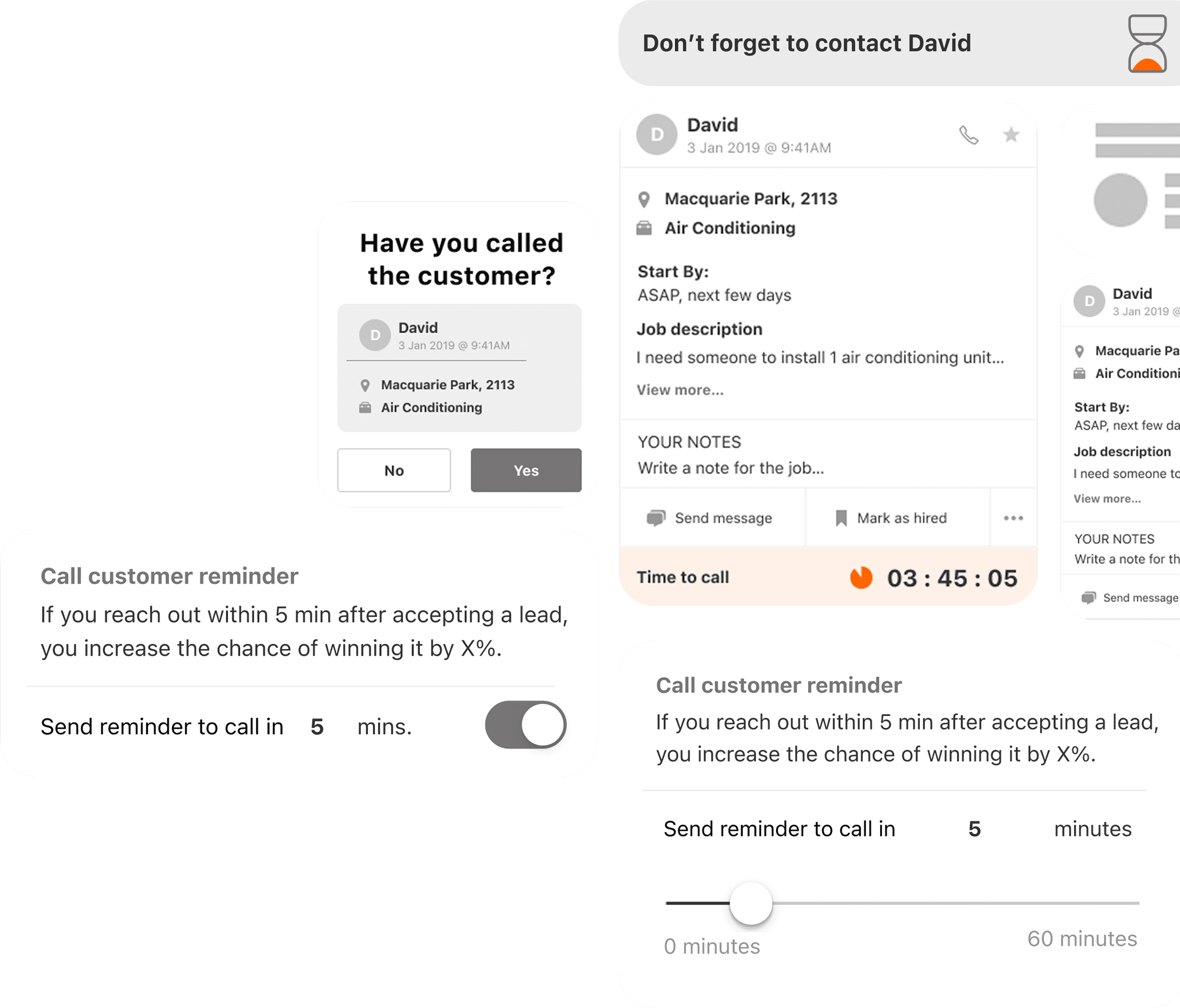
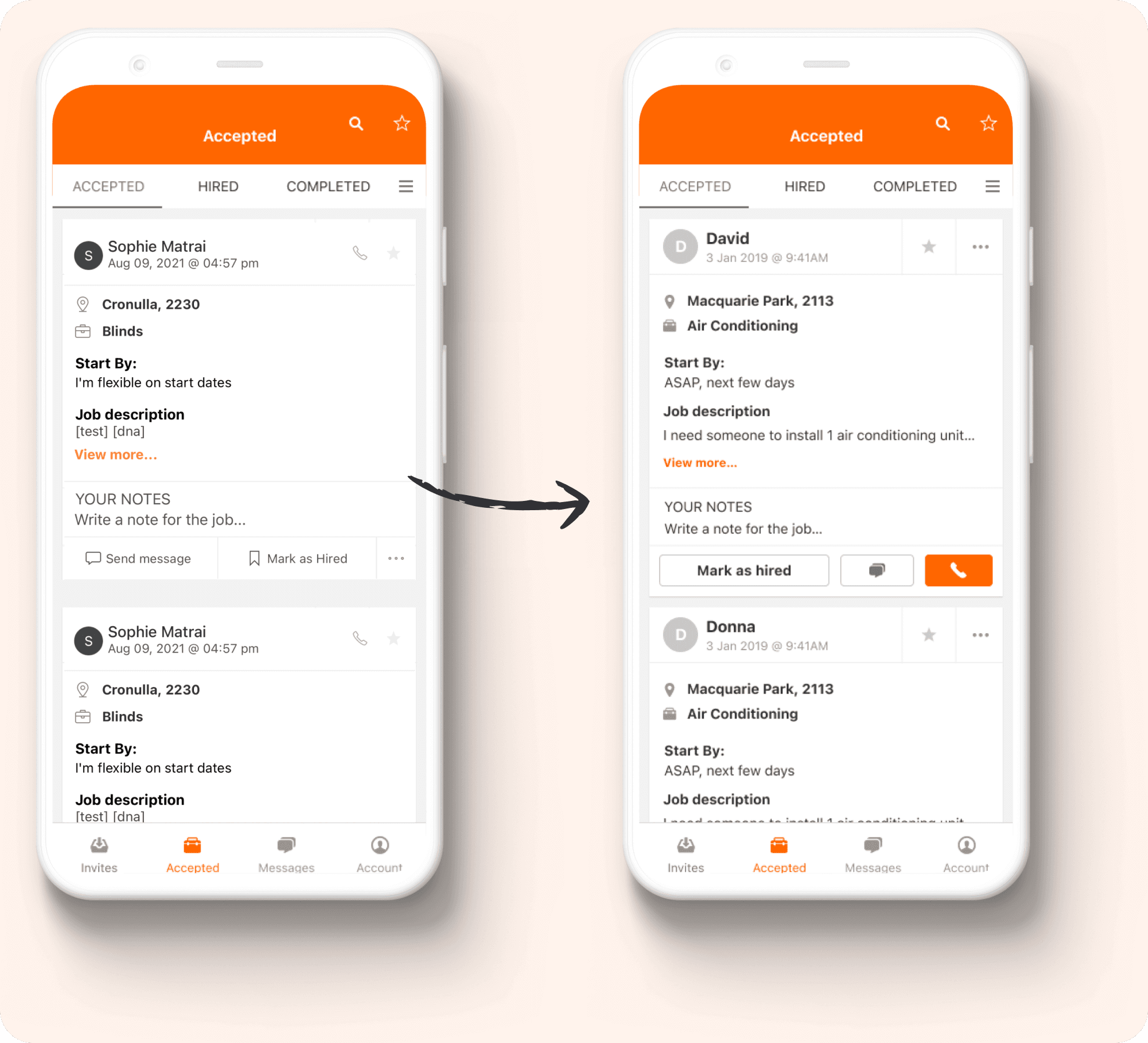
Rearrange accepted lead card buttons to highlight the call button as the most important action we wanted the tradie to take after accepting a job lead.
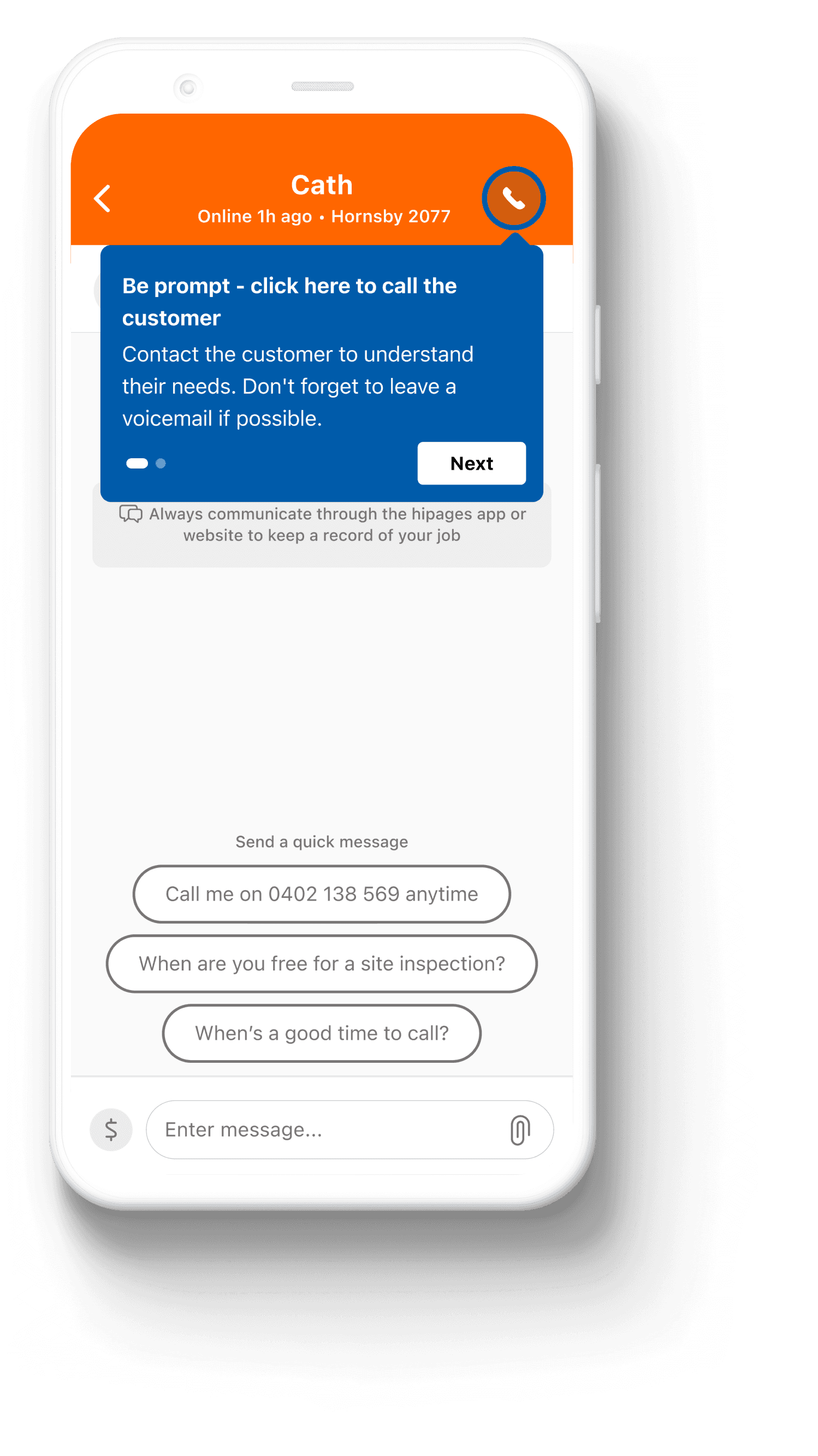
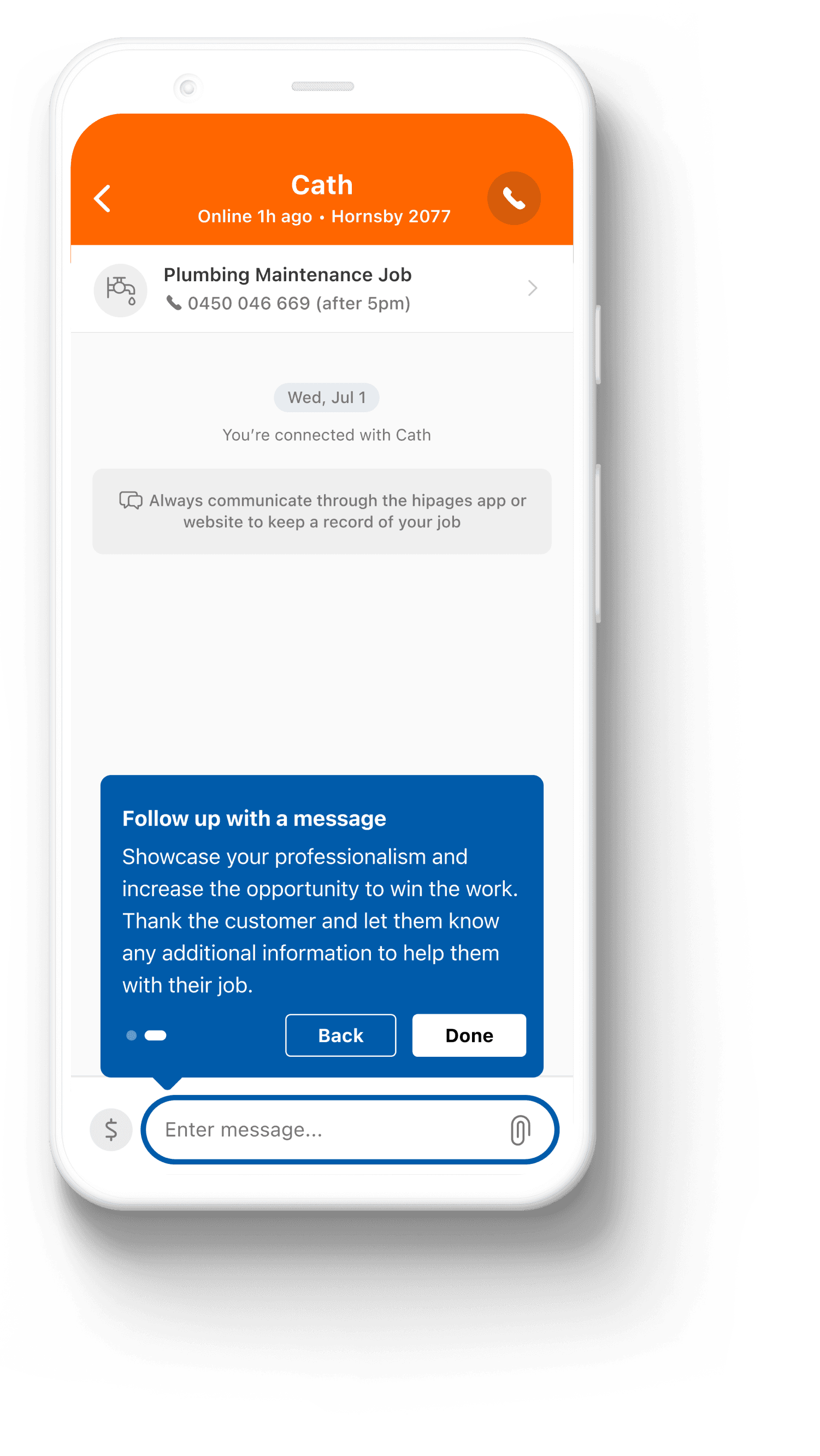
The first time a Tradie accepts a job lead, call out the ‘call icon’ and ‘message button’ with a tooltip to highlight the next steps which we want them to take.
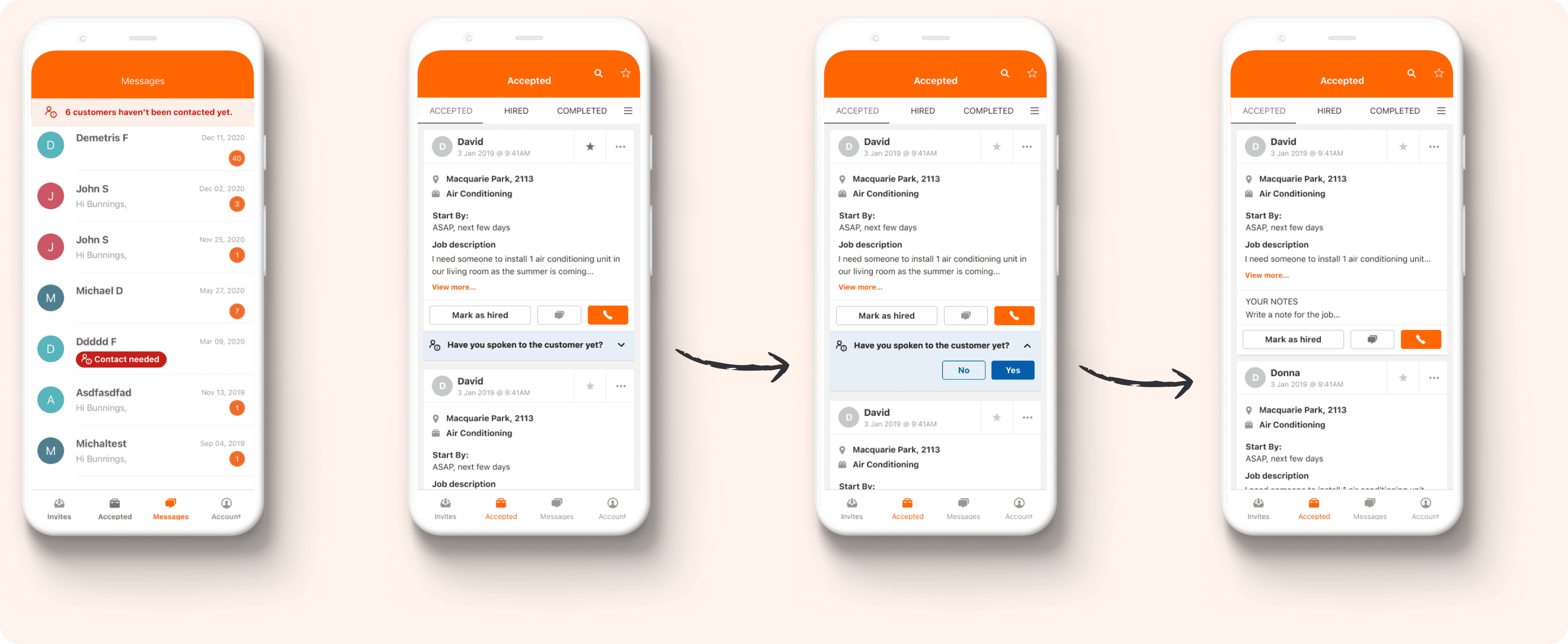
Check to see if the Tradie had managed to contact the customer via a notification 10 minutes after accepting the job lead.
In the Message Centre screen call out the next best actions after a job lead was accepted.
Released Experiments
We have chosen to go with the following solution which we turned into our first experiment.
Tradie Response Speed Experiment - Version 1
We have chosen to go with the following solution which we turned into our first experiment releasing it to small cohort of users.
Problem
Hypothesis
Experiment Results
The experiment ran for 5-7 days as a 50-50 split test in the iOS app, only being shown to tradies with < 30 days of tenure. (whether they have already claimed).
The Tooltip had a significant and immediate effect.
Shortly after launch, we observed an average improvement of 50% in contact times and a 50% reduction in tradies not responding at all.
85% of the tradies who viewed the tooltip immediately messaged/called the consumers.
Although in the long term, after a few days, the effect of the tooltip diminished, and the improvement in response compared to the control was only a 10-20% improvement across the two behaviours.
Detailed Results
By the end of the experiment, 330 tradies had seen the tooltip after they accepted a claim.
Immediately after seeing the tooltip, a tradie’s behaviour was significantly improved:
Prediction
If the hypothesis is true, then we expect to see:
Tradies hitting the call button AND sending messages via the hipages Message Centre on average 15% quicker than previously
A change in behaviour that persists as it becomes self-reinforcing (better comms leads to more hires, which leads to more confidence and expertise, which leads to better comms)
Hence, if we see success is short-lived, then it is a clue that either more coaching is required or improved contact behaviour is not leading to better success for the tradies.
Targeted Users
New tradies less than 30 days tenure.
Design
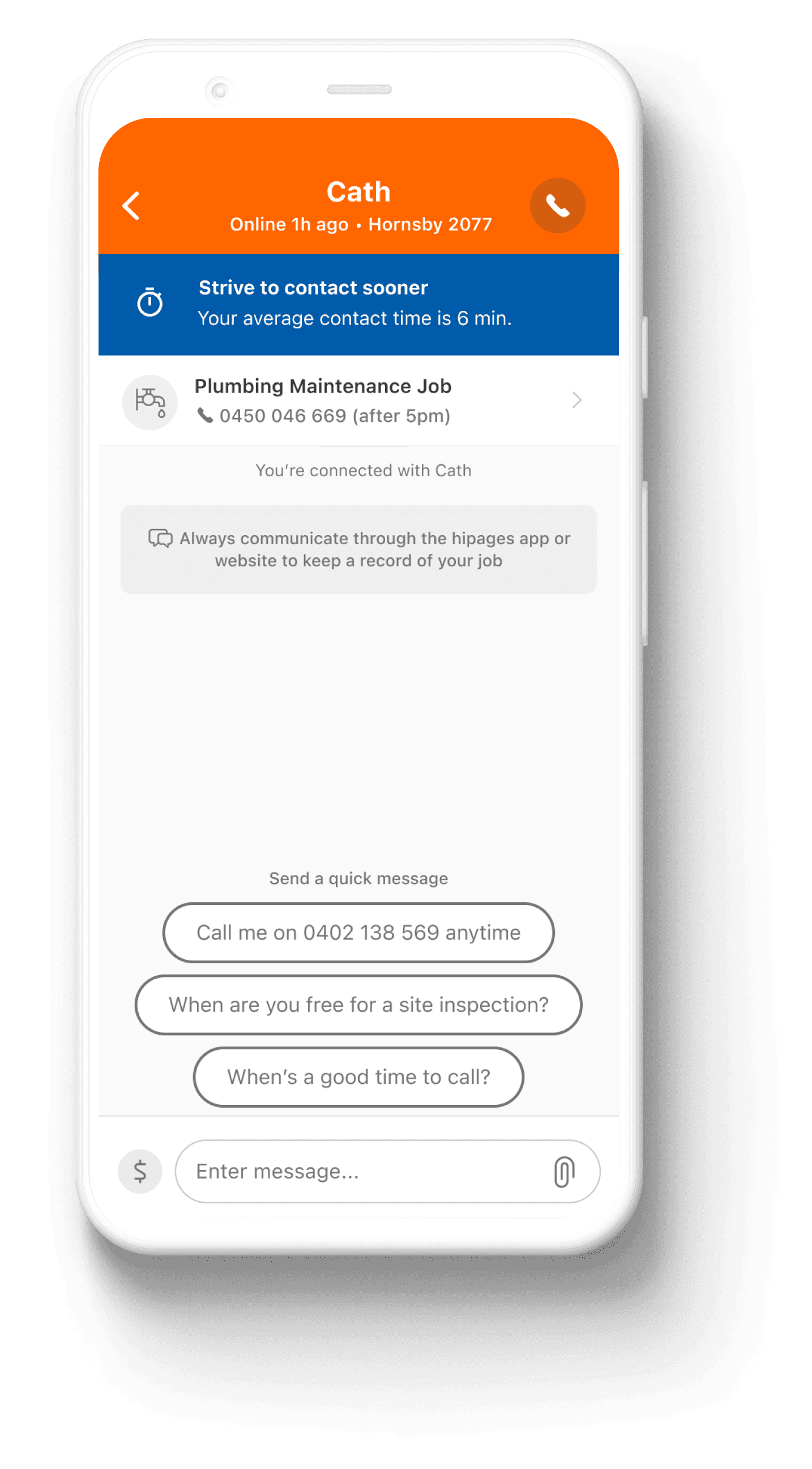
For our first experiment, we showed a simple tooltip encouraging the tradie to contact consumers immediately after accepting their lead.
This was our first step to creating a well-thought-through onboarding experience for tradies, which we hoped would help them build good habits and increase their chances of winning work.
User journey:
When the user accepts a job lead for the first time, they’re shown the message centre with new tooltips highlighting the call button and the message input field.
of the tradies communicated with the consumer within 5 minutes
85%
of tradies haven’t communicated at all
07%
Follow-up Experiments
Now that we had validated our initial hypothesis and learned that we could influence tradie behaviour, we soon scaled up the solution design and released it to all tradies, then considered further iterations.
We then experimented with other ideas as we wanted to continue to drive good behaviour using the hook model in the following strategy:
First, triggering the tradie, then bringing them to action in what we want.
Rewarding them so they can feel like an investor and will want to return to the specific activity to achieve the right outcome.
For this reason, we designed follow-up messages to prompt, motivate, and bring tradies back to the actions we wanted to direct them towards.
Uncontacted Consumers on Message Centre Screen Experiment - Version 2
#2
Problem
Hypothesis
The second usage of the component was on the ‘Accepted’ screen, where we gathered the data on the level of engagement between the tradie and the homeowner.
In the month following the release of the new features to iOS users, there was a 25% reduction in the number of claims with no response at all via the message centre.
Solution
Background
Released to 100% of the iOS tradies features that would remind and encourage them to contact the consumer after they claimed a lead.
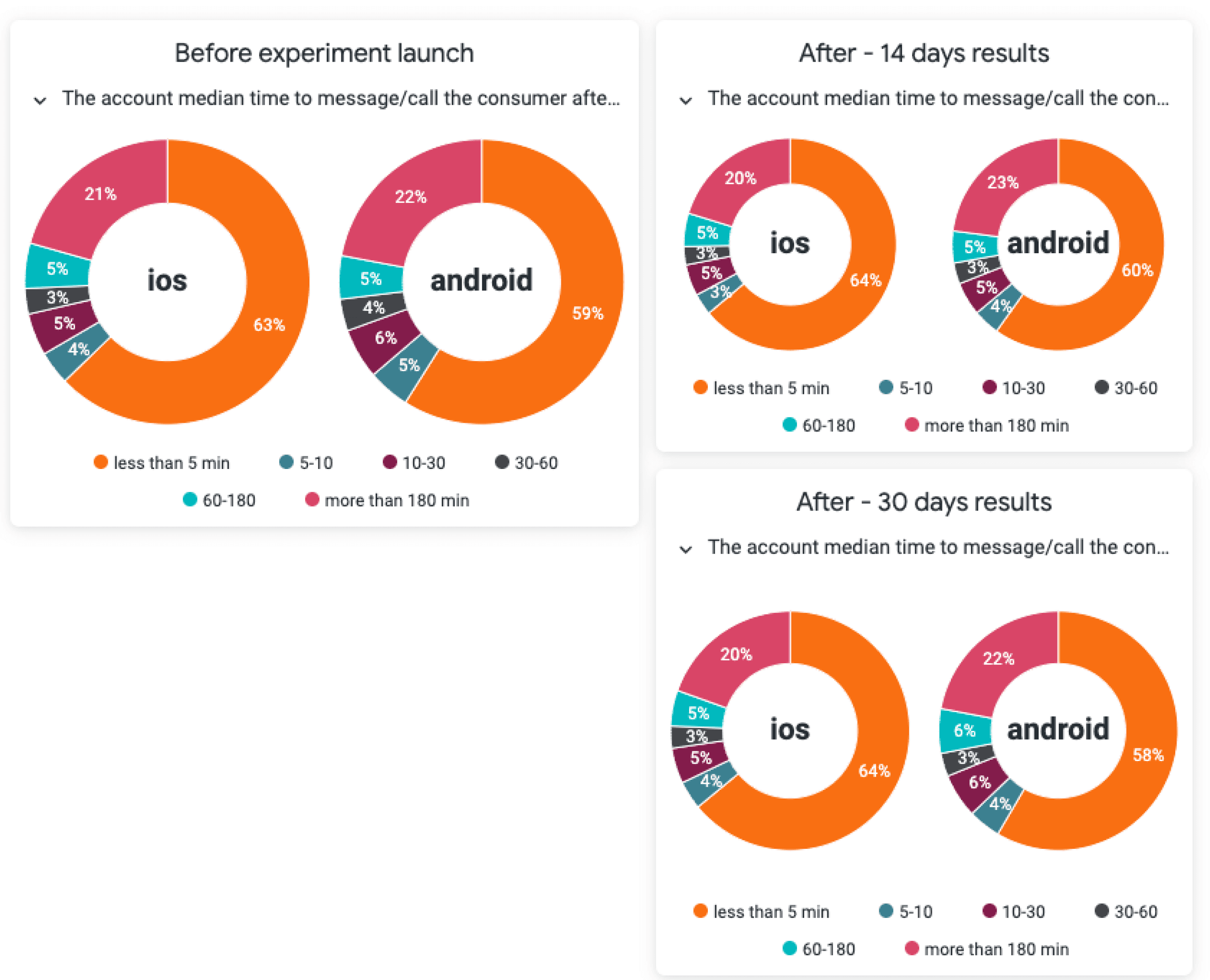
We analysed the experience from two angles: the distribution of the time taken to process a claim and the distribution of time taken to respond for all accounts, based on the account median time to response. last, we looked at the intervals of 14 days and 30 days after the new features were released.
Experiment Results
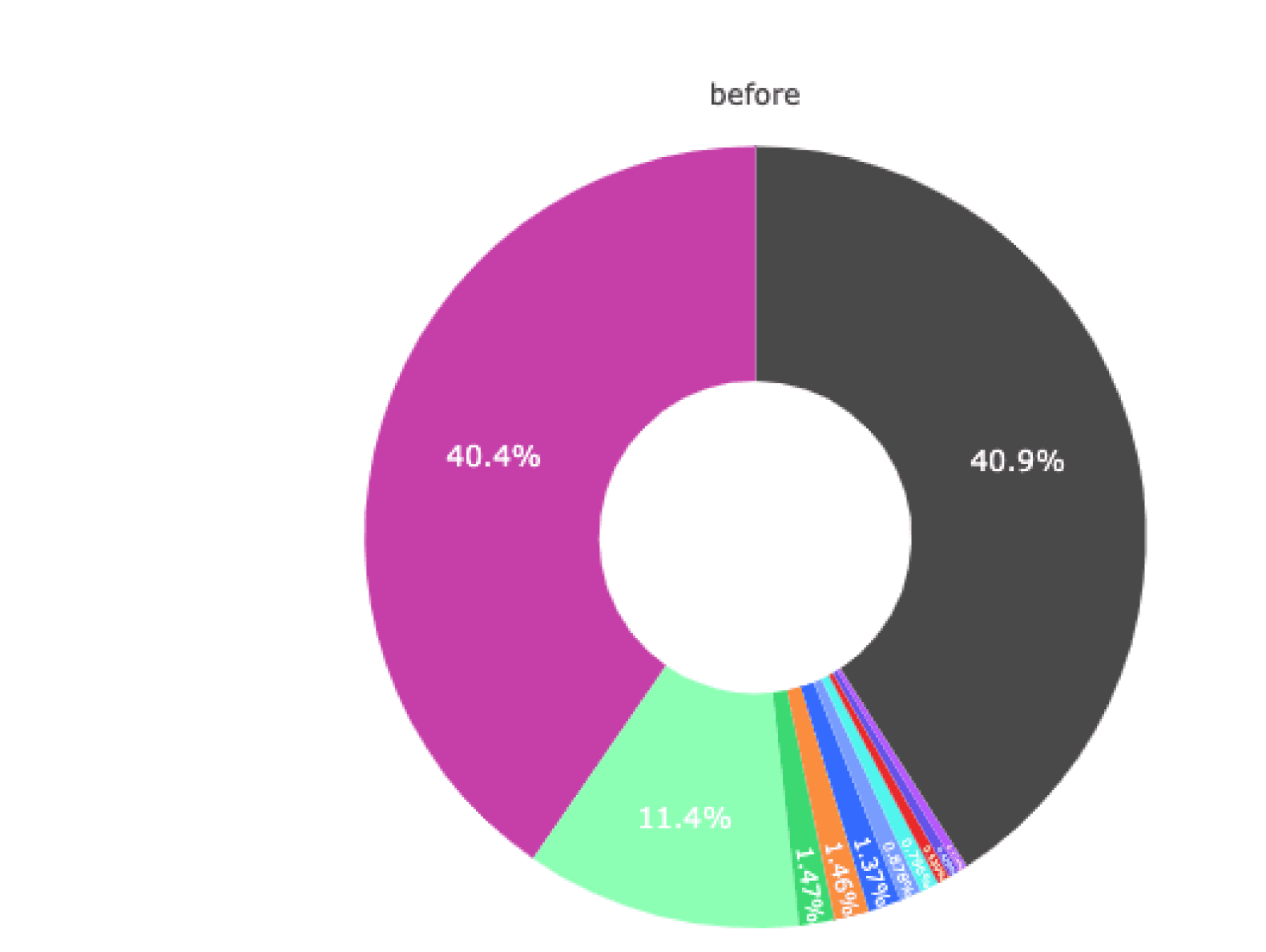
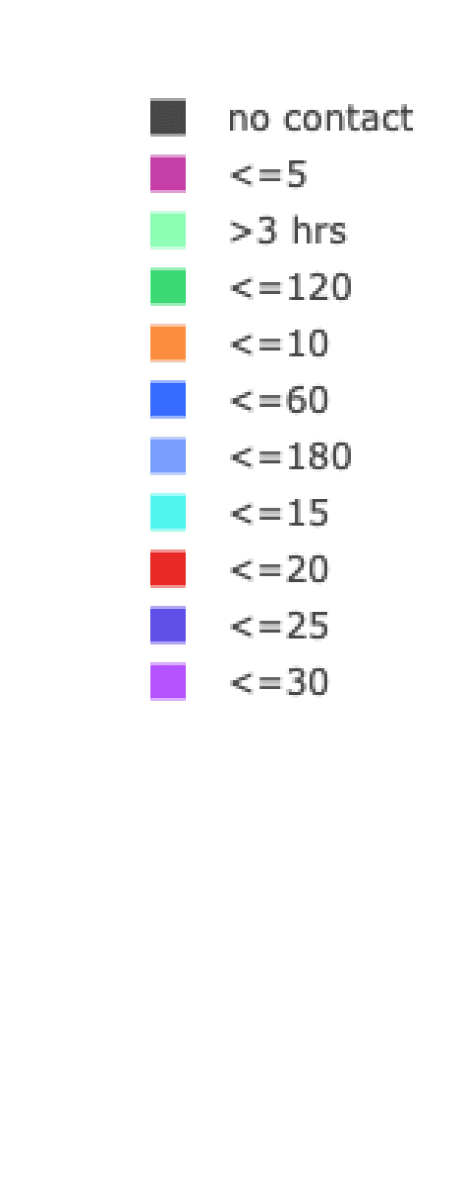
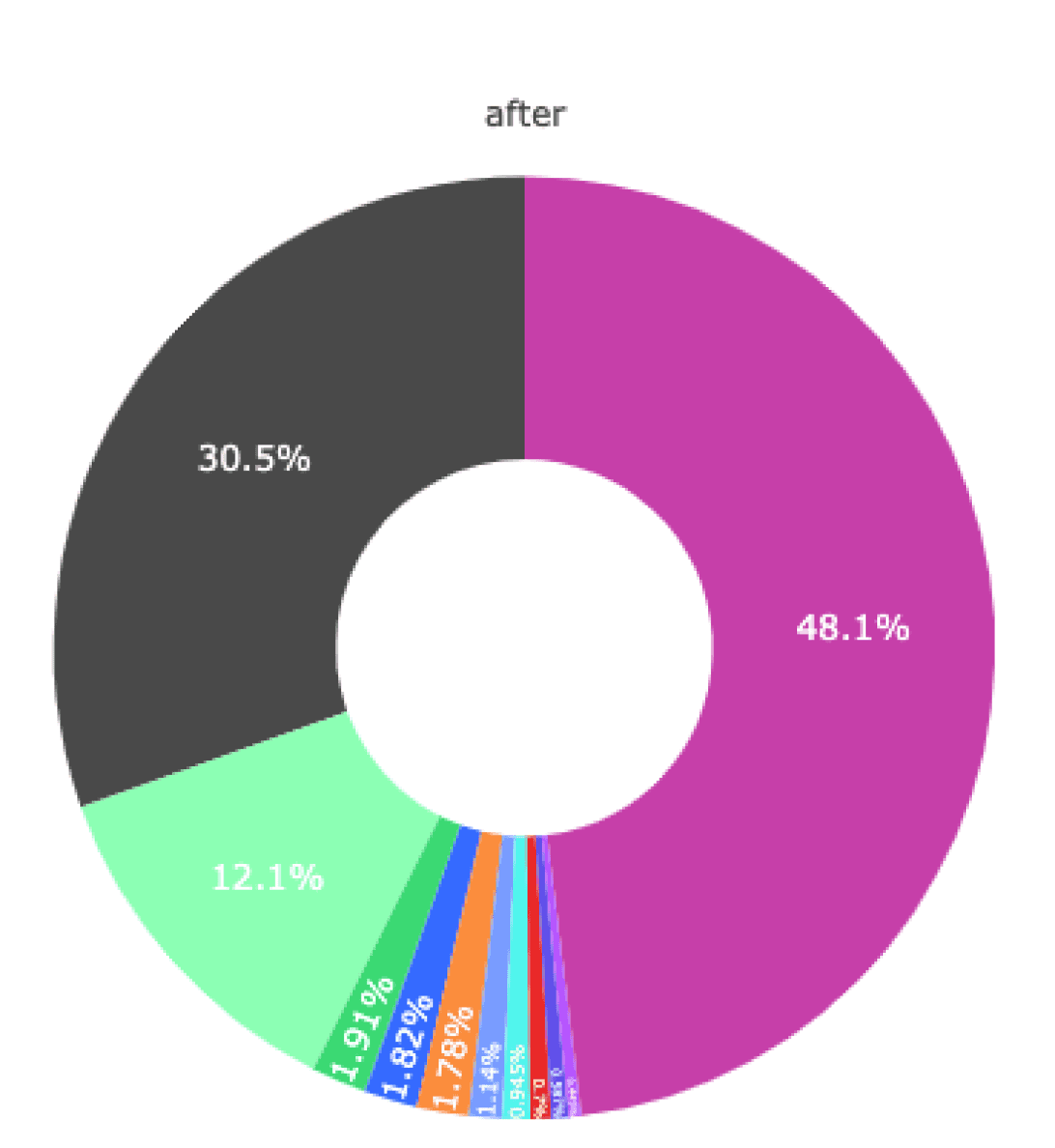
In addition, we observed a 19% increase in the portion of claims with a response within 5 minutes.
For the accounts, we created a new feature called ‘Time to respond’. This feature calculates the median minutes it takes for an account to attempt to contact a homeowner at intervals of 14, 30, 60, and 90 days.
Tradie Response Speed Experiment - Version 3
We believed that if we tracked tradies who had to slow down in terms of response time and prompted them about it, then we could help them start to slow down in terms of response time and prompted them about it, then we could get them to build a longer-lasting habit of contacting the homeowner ASAP.
After accepting a job lead, we wanted to display tooltips as shown here after the first 30 days. Displaying it until the tradie swipes left to delete. If the tradie doesn’t act on the message, it will be deleted after 5 days.
Tradie Response Speed Hygiene - Version 4
Problem
Solution
In order to help tradies take the best action, I reordered the accepted job lead card buttons to highlight the call icon as the number one action. I placed the message icon on the right side, while I placed the “Mark as hired” button as a tertiary action.
Learning